
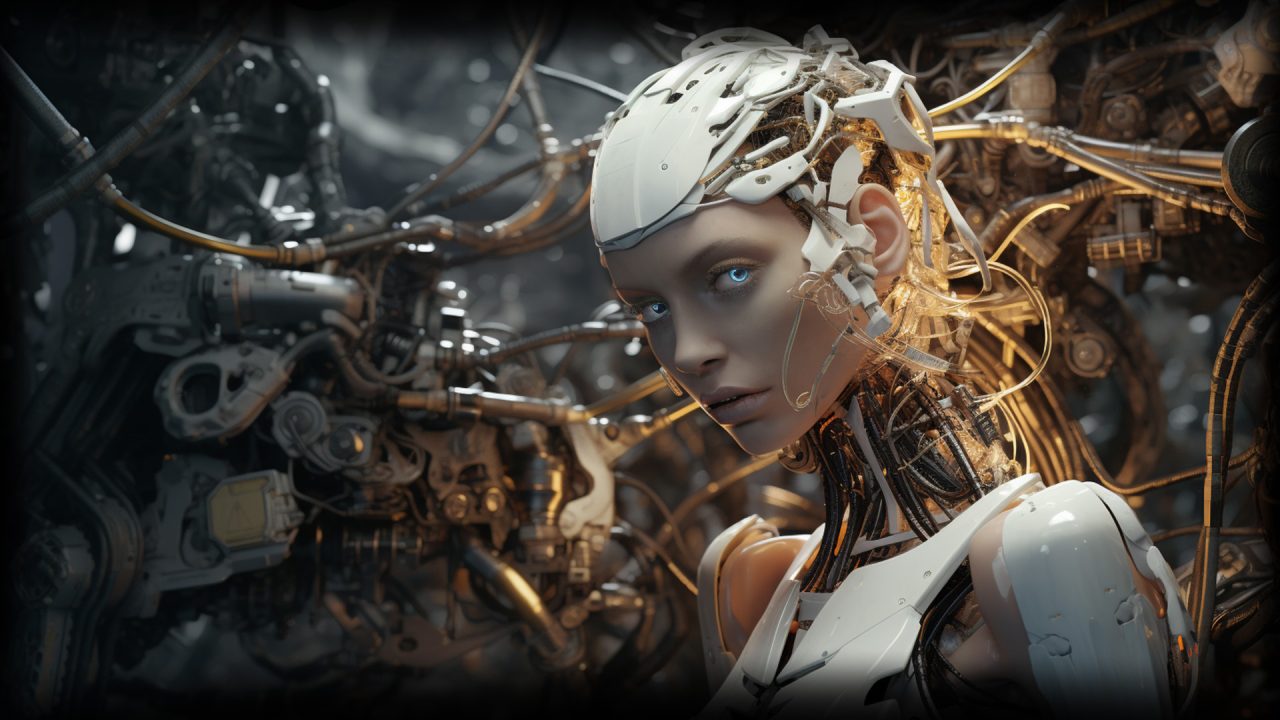
Are you curious about the truth behind all the hype surrounding AI? Well, get ready to uncover the reality behind the myths!
In this exploration of AI myths versus reality, we will debunk common misconceptions and reveal the true nature of artificial intelligence. You may have heard that AI is a magical replacement for human intelligence or that it will lead to widespread unemployment. But the reality is far more nuanced.
AI is not infallible or unbiased, nor can it truly replicate human emotions. And guess what? AI is not just for large corporations either.
Join us as we delve into the world of AI and discover the truth that lies beneath the surface.
AI Can Replace Human Intelligence
You may think that AI can fully replace human intelligence, but that isn't the reality. As a member of a community that values belonging, it's important to understand the limitations of AI.
While AI has made significant advancements in recent years, it still lacks the complex emotional intelligence and creativity that define human intelligence.
AI excels in tasks that require processing large amounts of data and making predictions based on patterns. It can analyze data at an incredible speed and provide valuable insights. However, when it comes to understanding and empathizing with human emotions, AI falls short. It can't truly comprehend the nuances of human feelings or provide the same level of emotional support that a human can.
Moreover, AI struggles with tasks that require creative thinking and problem-solving. Human intelligence isn't just about processing information; it's about using that information to come up with innovative solutions and think outside the box. AI algorithms are limited by the data they're trained on and can't generate truly original ideas.
In conclusion, while AI has its strengths, it can't fully replace human intelligence. As a member of this community, it's important to recognize and appreciate the unique abilities that each of us brings to the table.
Rather than fearing AI as a replacement, we should embrace it as a tool that can augment and enhance our own abilities, allowing us to achieve even greater things together.
AI Will Lead to Mass Unemployment
Mass unemployment isn't an inevitable consequence of AI. While there are concerns about job displacement due to the automation of certain tasks, it's important to understand that AI technology also has the potential to create new job opportunities and enhance existing ones. Rather than fearing the rise of AI, it's more productive to focus on how we can adapt and evolve in a changing job market.
One way AI can contribute to employment is by augmenting human capabilities. By automating repetitive and mundane tasks, AI allows workers to focus on more complex and creative aspects of their jobs. This can lead to higher job satisfaction and productivity, ultimately benefiting both individuals and organizations.
Additionally, the development and deployment of AI systems require human expertise. From data scientists and engineers to AI trainers and ethical consultants, there's a growing demand for professionals with the skills to design, implement, and manage AI technologies. As AI continues to advance, these roles will become increasingly important and create new avenues for employment.
It is also worth noting that history has shown us that technological advancements often lead to the creation of new industries and job opportunities. While some jobs may become obsolete, new ones will emerge, requiring different skill sets. By embracing lifelong learning and adapting to the changing demands of the job market, individuals can position themselves for success in the AI-driven future.
AI Is Infallible and Unbiased
AI technology isn't exempt from errors and biases. While artificial intelligence is often hailed as an infallible and unbiased solution, the reality is quite different. As humans develop AI systems, they inadvertently introduce their own biases into the algorithms, leading to biased outcomes. AI systems are trained on large datasets, which can contain inherent biases and prejudice. These biases can perpetuate societal inequalities and discrimination. It's crucial to recognize that AI systems are only as good as the data they're trained on and the algorithms they employ.
Furthermore, AI technology isn't infallible. It can make mistakes just like humans do. AI algorithms rely on patterns and correlations in data to make predictions or decisions. However, these patterns can be misleading and result in erroneous outcomes. Additionally, AI systems can be vulnerable to adversarial attacks, where malicious actors exploit weaknesses in the algorithms to manipulate their behaviour.
To address these issues, it's essential for AI developers to actively work on reducing biases and improving the accuracy of AI systems. Transparency and accountability are key in ensuring that AI technology is fair and reliable. Ongoing research and development are necessary to continuously improve AI algorithms and mitigate biases.
AI Can Replicate Human Emotions
Emotions in AI remain an elusive goal despite popular misconceptions. While it's true that AI has made significant advancements in understanding and recognizing human emotions, replicating them accurately is still a challenge. AI systems today can analyze facial expressions, tone of voice, and even text to infer emotions, but they lack the depth and complexity that humans possess.
It is important to remember that emotions are deeply rooted in human experiences, relationships, and cultural contexts. AI, on the other hand, lacks these fundamental aspects of being human. It can mimic certain emotions, but it can't genuinely experience them. AI lacks the ability to feel joy, sadness, love, or empathy in the same way that humans do.
Furthermore, emotions are subjective and personal, varying from individual to individual. AI algorithms, although powerful, can't fully understand the nuances and intricacies of human emotions. They rely on patterns and statistical analysis, which often fall short of capturing the depth and uniqueness of human emotional experiences.
While AI can assist in certain emotional tasks, such as recognizing emotions for customer service or providing recommendations based on mood, it's important to understand its limitations. AI can't replace the genuine emotional connection and understanding that humans seek and desire from one another. Instead, AI should be seen as a tool that complements and augments human emotions rather than replicating them.
AI Is Only for Large Corporations
You might think that AI is only accessible to large corporations, but that's not the case. It's true that in the past, AI technology was predominantly utilized by big companies with substantial resources. However, things have changed significantly in recent years. The democratization of AI has made it more accessible than ever before, allowing businesses of all sizes to harness its power.
Today, there's a wide range of AI tools and services available that cater to the needs and budgets of small and medium-sized enterprises (SMEs). These tools are designed to be user-friendly and require little to no technical expertise, making it easier for businesses like yours to integrate AI into their operations.
Whether you're looking to automate repetitive tasks, improve customer service with chatbots, or gain valuable insights from data analysis, there are AI solutions out there that can help you achieve your goals. Many of these solutions are cloud-based, meaning you can access them remotely without the need for expensive hardware or infrastructure.
By embracing AI, you can level the playing field and compete with larger corporations. The key is to identify your specific needs, explore the available AI options, and find the right solution that aligns with your business objectives and budget.
AI Is a Threat to Humanity
Occasionally, concerns arise about the potential threat AI poses to humanity. It's natural to worry about the unknown and to question the impact of artificial intelligence on our lives. However, it's important to separate fact from fiction and understand the reality of AI's role in our world.
First and foremost, it's crucial to note that AI is a tool created by humans. Its purpose is to assist and enhance our capabilities, not to replace us. The idea of AI turning against humanity, like in science fiction movies, is simply a myth. AI systems are designed with safeguards and ethical principles to prevent any harm to humans.
Moreover, AI technology is developed by a collaborative effort of scientists, engineers, and researchers from diverse backgrounds. The goal is to create AI that benefits all of humanity, not just a select few. The AI community is dedicated to ensuring transparency, fairness, and inclusivity in its development.
In reality, AI has the potential to solve some of humanity's most pressing challenges. From healthcare to climate change, AI can aid in finding innovative solutions. It can help us make better decisions, improve efficiency, and enhance our overall well-being.
Instead of fearing AI, we should embrace it as a tool that can assist us in achieving our goals. By understanding the reality of AI's role and actively participating in its development, we can ensure that it benefits all of humanity.
Let's work together to shape a future where AI and humanity coexist harmoniously.
AI Is All About Robots and Automation
Most people often associate AI with robots and automation. It's understandable why this misconception exists. Movies and media have portrayed AI as humanoid machines taking over the world. However, the reality is quite different. AI encompasses a much broader range of technologies and applications.
While robots and automation are certainly a part of AI, they aren't the be-all and end-all. AI is about creating intelligent systems that can mimic human intelligence and perform tasks that typically require human cognition. This can include anything from natural language processing and image recognition to data analysis and decision-making.
AI is being used in various industries to improve efficiency, accuracy, and productivity. For example, in healthcare, AI is helping doctors diagnose diseases more accurately by analyzing medical images. In finance, AI algorithms are used to detect fraudulent transactions. In customer service, AI-powered chatbots are providing instant support to consumers.
So, while robots and automation are a visible aspect of AI, it's important to understand that AI goes beyond just that. It's a powerful tool that has the potential to revolutionize countless industries and improve our lives in ways we couldn't have imagined.
Embracing AI means embracing a future where technology works alongside humans, complementing our abilities and creating a better world for all.
AI Can Solve All Our Problems
While AI has the potential to greatly benefit society, it's important to recognize that it can't solve all our problems. AI is a powerful tool, but it isn't a magical solution that can fix everything. It has its limitations and challenges that we need to be aware of.
Firstly, AI relies on data. It needs a vast amount of high-quality data to learn and make accurate predictions. However, not all problems have readily available data or can be easily quantified. Some issues, like complex social or ethical dilemmas, require human judgment and moral reasoning, which AI lacks.
Secondly, AI is only as good as the algorithms and models it's built upon. While AI can process large volumes of data quickly, it can still make mistakes and be biased. It's essential to address these biases and ensure that AI systems are fair and inclusive.
Lastly, AI can't replace human creativity, empathy, and intuition. Some problems require innovative thinking, emotional intelligence, and a deep understanding of human behaviour. AI can assist in these areas, but it can't fully replace the human touch.
AI Will Take Over the World
AI isn't poised to seize control of the world. This fear, perpetuated by movies and sensational media, is a myth that often leaves people feeling anxious and disconnected. It's important to remember that AI is a tool created by humans, and it's programmed to serve our needs. While AI has the potential to automate tasks and improve efficiency, it lacks the capacity for consciousness, emotions, and personal desires. It's simply a tool designed to assist and augment human capabilities, not to replace us.
The idea that AI will take over the world stems from a fear of the unknown and a desire for control. However, it's crucial to understand that AI is limited by the boundaries set by its creators. It can't act independently or make decisions outside of its programming. AI is ultimately a reflection of human values and intentions.
Rather than fearing AI, we should embrace its potential to enhance our lives. AI has the ability to revolutionize industries, improve healthcare, and address global challenges. By working alongside AI, we can achieve greater productivity and innovation. It's important to remember that we're in control of AI, and it's up to us to shape its development and ensure it aligns with our values and aspirations.
AI Is Far From Becoming a Reality
Don't hold your breath for AI to become a reality just yet. While we often hear about the potential of artificial intelligence (AI) and its ability to transform various industries, the truth is that we're still far from achieving true AI.
Despite the hype surrounding AI, it's important to understand that there are significant challenges that need to be overcome before we can fully realize its potential.
One of the main obstacles is the lack of general intelligence in AI systems. While AI has made great strides in narrow tasks such as image recognition and natural language processing, it still struggles with common sense reasoning and understanding context. This means that AI is limited in its ability to adapt and learn in new situations, making it far from the all-knowing, super-intelligent beings depicted in movies.
Additionally, there are ethical and societal implications that need to be addressed before AI can become a reality. Questions about privacy, job displacement, and bias in algorithms need to be carefully considered and regulated. These issues require collective effort and collaboration to ensure that AI is developed and deployed responsibly.
Conclusion
But you might be thinking, 'What about the ethical concerns surrounding AI?'
While it's true that AI raises important ethical questions, it's important to remember that these concerns can be addressed through responsible development and regulation.
As with any powerful technology, we must approach AI with caution and ensure that it's used for the benefit of humanity.
By acknowledging the myths and understanding the reality of AI, we can harness its potential to improve our lives and create a better future.

AI FEAR IN THE MEDIA
By AI Academy |
